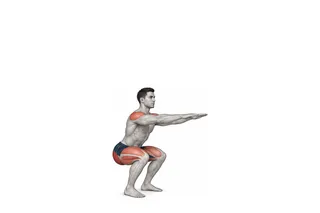
A glute bridge is a floor exercise that raises and lowers the hips while the feet remain supported. This guide helps you compare the starting position, practise a controlled lift and decide whether to explore a matching home workout. It is general adult fitness information, not an assessment of whether the movement suits your health or circumstances.
Start with the DailyHomeFit glute bridge demonstration. Read its written instructions and easier option as well as watching the animation. The demonstration illustrates a movement; it cannot check your alignment, judge discomfort or prescribe a repetition target.
Set up before pressing play
Choose a clear area where you can comfortably lie down, bend your knees and return to standing afterward. DailyHomeFit lists a mat for this exercise. Position the screen so you can review the instructions before lying down, rather than repeatedly turning your head to follow a moving image.
For basic form, the American Council on Exercise glute bridge guide describes lying on your back with bent knees and feet flat, about hip-width apart. It recommends a gentle abdominal contraction, exhaling during the lift and lowering slowly while inhaling. The glutes produce the hip lift, with the abdominal muscles helping control the trunk. Avoid seeking extra height by excessively arching the lower back.
Make the first practice about control
Treat the animation as a sequence to understand, rather than a speed to copy. Notice the starting position, the direction of the lift and the return. You can pause the demonstration to read a cue, then watch it again before practising.
The site's easier option is a smaller lift. That provides a practical choice when comparing the full demonstration with a range you can control. It does not mean discomfort should be ignored: stop if the movement causes pain, dizziness or makes you feel unwell. Seek qualified advice when you need help deciding what is appropriate.
Three things to review
- Chasing height: a larger lift is not automatically a better attempt. Revisit the setup and use a smaller range instead of forcing the top position.
- Rushing the return: watch how the demonstration comes back to its starting position. Give the lowering phase attention instead of concentrating only on getting the hips up.
- Treating the GIF as a test: matching its apparent speed or shape does not establish that your technique is correct. A screen cannot substitute for individual feedback.
Use these prompts to review the movement, not to diagnose the cause of a symptom. If you cannot find a comfortable starting position, choosing another activity or asking a qualified professional is more useful than repeatedly forcing the same attempt.
Choose a session by its whole movement list
DailyHomeFit's Legs, at your own pace includes marching, squats and bridges. The Gentle core, steady start combines marching with bird dog, dead bug and bridge. These are different combinations, even though both contain the movement discussed here.
Open the workout page before starting. Check its equipment, level and all the positions involved. A bridge appearing in a routine does not make the whole routine a bridge tutorial, and the title does not provide an individual suitability assessment. Allow room for transitions between standing and floor positions.
A timed interval is also different from a repetition prescription. You can pause when you need more time to prepare, recover or read the next instruction. Completing a countdown is not a reason to continue through discomfort or to increase difficulty afterward.
Decide what to do next
Your next visit can simply repeat the same manageable option. More height, more repetitions and a harder variation are separate decisions, not requirements for every workout. For broader context, the NHS strength-exercise guidance advises building up gradually and seeking advice if you are unsure about exercise suitability.
If you are new to selecting movements, continue with the beginner bodyweight exercise guide. Use the library to compare starting positions and the workout directory to compare complete sessions. Choose a small next step you understand rather than collecting a long list of exercises.
Sources checked on 17 October 2026: ACE's glute bridge exercise guide for basic setup and movement cues; NHS strength exercises for gradual progression and suitability context. Product instructions and session links refer to DailyHomeFit's current pages. These sources do not imply endorsement or professional review of this article.