Activity is part of wider health care
NIDDK's fatty liver guidance describes physical activity as beneficial in fatty liver disease, including benefits without weight loss. It discusses activity within a wider approach to care. That does not mean a particular twist, stretch or abdominal exercise directly targets the liver.
This page is a reading guide, not a treatment programme. It does not diagnose fatty liver, assess disease severity or prescribe weight change. The terms MASLD and MASH may appear in current discussions alongside the older terms NAFLD and NASH used by the linked resource.
Separate a movement from a treatment claim
An abdominal movement can train muscles without being a liver treatment. A standing movement can avoid floor transitions without being appropriate for every person with liver disease. Neither an exercise name nor a green or pink animation establishes a medical benefit for an individual.
If you have a liver diagnosis, discuss activity choices with the team managing your care. Ask what type of activity is appropriate, whether there are restrictions, and how to adjust your plan if your health changes. Do not use this page to change medicines, supplements or clinical advice.
A general example, not a liver exercise
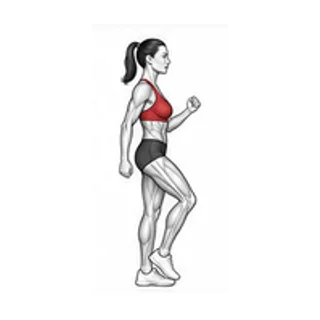
The marching illustration below is included to explain how to use our exercise demonstrations. It carries no liver-specific repetition target, duration or outcome promise. Read the setup and easier option without treating the animation as a prescription.
When browsing the body-area exercise library, use labels to understand movement positions and equipment. A workout's duration does not indicate how it affects your liver. A short list you understand is more useful for discussing options with your care team than an unreviewed collection of purported organ exercises.