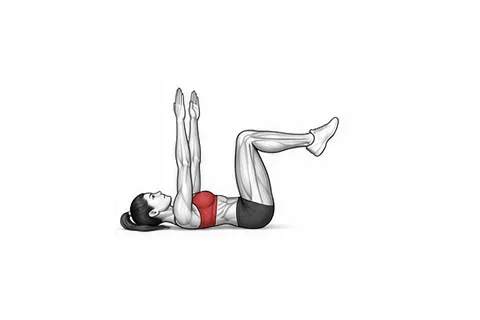
A dead bug is a floor-based core exercise: you lie on your back and move an arm and the opposite leg while controlling your trunk. If coordinating four limbs feels confusing, begin by understanding one reach and its return, then compare the simpler heel-tap option on DailyHomeFit.
This guide is general adult fitness information. It cannot assess your technique or decide whether floor exercise is suitable for you. If you have pain, an injury, recent surgery, pregnancy-related concerns or another condition affecting exercise, seek individual guidance before trying an unfamiliar movement. Stop if exercise causes pain, dizziness or makes you feel unwell.
Watch the starting position first
Open the dead bug exercise demonstration before lying down. Read the instructions and easier option, then watch where the arms and knees begin. DailyHomeFit lists a mat for this exercise; choose a clear area with space for your limbs and a safe way to get down and back up.
A useful first viewing has one purpose: identify which arm moves with which leg. Follow one side through the whole sequence instead of trying to copy every movement immediately. Place your device where you can review it between attempts without twisting to watch the screen.
Understand the reach and return
The National Academy of Sports Medicine dead bug guide describes starting on your back with arms upward and bent knees above the hips. The abdominal muscles help resist excessive back arching as opposite limbs extend; the obliques also assist trunk control.
1. Establish a comfortable starting position with your arms raised and knees bent. 2. Slowly reach one arm back while extending the opposite leg, using a range you can control without your lower back arching. 3. Bring both limbs back to the start before changing sides. Keep breathing rather than holding your breath to finish a reach.
NASM emphasizes deliberate movement and identifies rushing, excessive reaching and back arching as common errors. Reaching closer to the floor is not a reason to sacrifice control. Shorten the reach if needed; stop rather than forcing a position that feels uncomfortable.
When coordinating both limbs is difficult
DailyHomeFit's listed easier option keeps the arms still and alternates heel taps. Compare that option with the full movement before choosing what to practise. Removing the moving arm gives you fewer things to follow, but the word “easier” does not mean it suits every person or every symptom.
You do not need to earn the full demonstration in one session. A practical review is to ask whether you understand the starting position, which side is moving and how to return. If the sequence remains confusing, pause and reread it instead of increasing speed to keep up with the GIF.
Three checks before adding more
- Can you follow one side? Watch a single opposite arm-and-leg pair, then the other. Confusing the sequence is a reason to slow down and review it.
- Are you treating the lowest reach as the goal? Compare control across the whole movement rather than how close a heel gets to the floor.
- Are you racing the animation? The loop is an illustration, not a prescribed cadence or a live assessment of your form.
These checks help you use the demonstration more thoughtfully. They do not confirm correct technique. Ask a qualified exercise professional for feedback if you need someone to observe your movement.
Choose a complete session carefully
The Gentle core, steady start workout includes marching, bird dog, dead bug and bridge. Its movement list involves standing and floor positions. Review all four exercises and the transitions, even if dead bug is the reason you opened the session.
Build your core control also includes dead bug, alongside marching, bird dog and plank, and is labeled intermediate. The shared exercise does not make the two sessions interchangeable. Compare the full list, equipment and level before deciding where to begin.
The site's timed intervals do not prescribe a repetition total. Pause when you need time to prepare or recover; a countdown is not a requirement to continue. You can return to the standalone demonstration instead of starting an entire session while still learning the sequence.
Pick a manageable next step
Keep your next decision specific: review the demonstration again, explore the heel-tap option, or compare the complete beginner session. There is no need to increase range, speed and workout length together. The NHS strength-exercise guidance supports building up gradually.
For help choosing among different starting positions, read the beginner bodyweight exercise guide. Use it to plan a small, understandable next step rather than collecting more movements than you can comfortably review.
Sources checked on 18 October 2026: NASM for dead bug setup, muscles and movement errors; NHS for gradual progression. Session lists and the heel-tap option were checked against DailyHomeFit's current exercise records. This article does not claim professional review or endorsement by these sources.