DailyHomeFit.Start workout
Still thumbnails · reduced motion
YOUR QUICK START
Step 1 of 6

Welcome to DailyHomeFit

Learn the site in six short steps. Explore movements, choose a manageable session and follow a challenge at your own pace.

← All articles
THE DAILYHOMEFIT JOURNAL · 3 MIN

Seated Marching at Home: A Steady Chair Exercise

Practise seated marching with a stable chair, small alternating lifts, easier options and clear guidance on pace and support.

DailyHomeFit journal · General fitness information

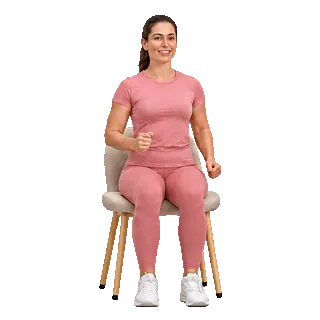
Woman in pink demonstrating a seated march on a chair.

For seated marching, sit on a stable chair, lift one foot a comfortable amount with your knee bent, lower it under control and change sides. Keep the movement small enough that your body stays steady. This is a seated movement practice, not a promise of weight loss or a replacement for every part of a workout.

Which chair and starting position should I use?

Choose a firm chair without wheels that will not slide or rock. Your feet should reach the floor comfortably. Clear the space around both feet and sit upright without leaning far backwards. Hold the sides of the seat if that helps you stay steady. The NHS sitting guide describes hip marching with chair support. A rolling office chair, soft sofa or high stool changes the setup and is not the starting option described here.

How do I lift and lower each leg?

Start with both feet down. Lift one bent knee only as far as feels comfortable, return the foot quietly, then lift the other side. Avoid throwing your trunk backwards to raise the knee higher. Let each foot settle before switching. The seated-march demonstration includes moving arms; you can keep your hands on the chair instead. The model’s knee height and animation speed are not targets for you.

What is an easier version?

Try a smaller foot lift and pause with both feet supported between changes. If lifting the whole foot is difficult, the exercise page offers a heel-only option; that is a gentler variation, not the same full marching action. Do not add ankle weights to solve a movement that already feels difficult. If you cannot sit comfortably or keep the chair stable, stop and ask for individual guidance before continuing.

How long should the first practice last?

Try a few slow alternating lifts, then rest. Use the pause to notice whether you were breathing freely and lowering each foot smoothly. You do not need to keep marching for a full video or timer. Increase practice gradually only when the same small movement remains comfortable. Seated marching may feel easy or demanding depending on the person; sitting down does not establish its intensity or guarantee that it meets an aerobic-activity target.

Can this replace walking or a complete workout?

It is one option for practising movement while seated, not an equivalent replacement for every benefit or task of walking. It does not provide a full programme of pushing, pulling, balance and other activity. See the home-workout starting guide for wider choices. Stop for pain, dizziness or feeling unwell, and seek individual advice when injury, surgery or a condition affects activity. Record the support and comfortable lift used, rather than treating a higher knee as automatic progress.


Questions and answers

Which chair and starting position should I use?

Choose a firm chair without wheels that will not slide or rock. Your feet should reach the floor comfortably. Clear the space around both feet and sit upright without leaning far backwards. Hold the sides of the seat if that helps you stay steady. The NHS sitting guide describes hip marching with chair support. A rolling office chair, soft sofa or high stool changes the setup and is not the starting option described here.

How do I lift and lower each leg?

Start with both feet down. Lift one bent knee only as far as feels comfortable, return the foot quietly, then lift the other side. Avoid throwing your trunk backwards to raise the knee higher. Let each foot settle before switching. The seated-march demonstration includes moving arms; you can keep your hands on the chair instead. The model’s knee height and animation speed are not targets for you.

What is an easier version?

Try a smaller foot lift and pause with both feet supported between changes. If lifting the whole foot is difficult, the exercise page offers a heel-only option; that is a gentler variation, not the same full marching action. Do not add ankle weights to solve a movement that already feels difficult. If you cannot sit comfortably or keep the chair stable, stop and ask for individual guidance before continuing.

How long should the first practice last?

Try a few slow alternating lifts, then rest. Use the pause to notice whether you were breathing freely and lowering each foot smoothly. You do not need to keep marching for a full video or timer. Increase practice gradually only when the same small movement remains comfortable. Seated marching may feel easy or demanding depending on the person; sitting down does not establish its intensity or guarantee that it meets an aerobic-activity target.

Can this replace walking or a complete workout?

It is one option for practising movement while seated, not an equivalent replacement for every benefit or task of walking. It does not provide a full programme of pushing, pulling, balance and other activity. See the home-workout starting guide for wider choices. Stop for pain, dizziness or feeling unwell, and seek individual advice when injury, surgery or a condition affects activity. Record the support and comfortable lift used, rather than treating a higher knee as automatic progress.

Related exercise demonstrations

These are DailyHomeFit website examples. Read the full instructions and easier options before trying a movement.

Seated march
Seated marchView instructions

Animation speed does not measure your exercise intensity or assess personal suitability.

GameRumble · Android

More from GameRumble

Explore these Android apps, or browse the full collection.

Browse all apps →
Everyday tools

Pregnancy Due Date

Estimated pregnancy dates and appointment planning. Not medical advice.

Open in Google Play
Everyday tools

All Calculator: Math & Finance

Math and everyday calculation tools, including general adult health estimates.

Open in Google Play

These links promote GameRumble apps. Features, ads, permissions and availability are described on Google Play. The apps are separate from DailyHomeFit workouts; installing one does not sync your website workout history.

Explore home workouts →All articles →

Home workout equipment