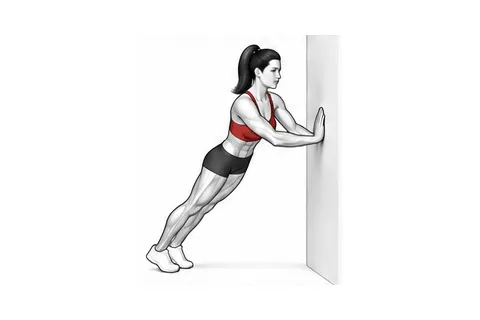
Arm exercises for women at home can include supported pushing and holding movements without hand weights. Choose them by your current experience, the position you can manage and how your wrists and shoulders feel—not by a promise of a particular arm shape.
This guide uses movements already available in DailyHomeFit. They involve the upper body and often the trunk as well; they are not a complete programme for every arm muscle. Women do not need a separate set of exercise mechanics simply because of their gender.
Start with supported options
The wall shoulder tap is a standing option in the Women’s library. With your hands on a solid wall and your feet a comfortable distance away, briefly move one hand toward the opposite shoulder, replace it and alternate. The easier option is to stand closer to the wall.
Watch the demonstration before trying the movement. Keep the transfer controlled instead of rushing between sides. If supporting yourself through your hands is uncomfortable, choose another position or seek advice; an exercise GIF cannot judge the cause of discomfort.
The wall forearm plank uses forearms against the wall. Its page explains the setup and a closer-to-the-wall option. A hold is still an exercise: keep breathing and finish before you lose a position you can control.
Explore floor movements only when they suit you
The kneeling shoulder tap starts on hands and knees. Its easier option is to lift the hand only a little. This is a different starting position from the high plank, which can be modified with knees on a mat.
Do not assume every plank variation is a beginner arm workout. Up-down planks, moving planks and shoulder taps can add demands beyond a simple supported hold. Use each page’s level and instructions to compare options, and leave advanced variations for another time if needed.
What about wall push-ups and biceps curls?
The wall push-up guide explains another supported pushing option. Its demonstration happens to appear in the Men’s collection, but the movement itself is not restricted to men. Choosing a collection changes the available artwork and programme; it does not make universal movements gender-exclusive.
The NHS strength-exercise guide includes wall press-ups and light-weight biceps curls. Curls use an external load, so they do not belong in a no-hand-weights routine. A collection of shoulder taps should not be presented as a substitute for every type of arm training.
Build a manageable practice
Select a small number of movements you understand, practise with the gentler options and allow time to rest. Use the Women’s exercise library to open each demonstration, then compare actual Women’s workouts.
The site currently offers core sessions and a guided challenge in that collection. This article does not invent a standalone arm routine that is not published. You can use the exercise pages to learn the positions before deciding how they fit your wider training.
Keep expectations practical
Track the movements you practised, which option you used and how comfortable the session felt. Avoid judging a workout only by appearance goals or a countdown to a promised result. For broader guidance on fitting strength work into a routine, see Mayo Clinic’s strength-training overview.
Stop a movement that causes pain. This article is general adult fitness information, not advice for pregnancy, postpartum recovery, an injury or a particular health condition.
Sources: NHS strength exercises and Mayo Clinic strength training. Linked movement instructions and modifications come from DailyHomeFit’s demonstration library.