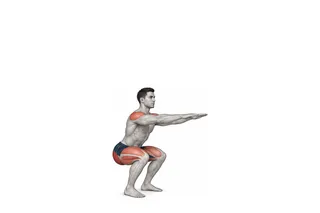
A home workout without equipment uses your own body as resistance instead of exercise machines or hand weights. For a beginner, the useful question is which movements you can perform comfortably and consistently—not how many exercises you can fit into one session.
This guide helps you select a small group of bodyweight exercises and use DailyHomeFit’s demonstrations before starting a timed workout. A mat may make floor positions more comfortable, and a wall exercise still needs a solid wall. Equipment-free does not mean every movement is suitable for everyone.
Choose movements by position and difficulty
Compare the starting position, movement pattern and easier option on each exercise page. Standing movements may be more practical when you have little floor space. Floor movements require room to get down and up without rushing. An exercise labelled Beginner can still feel demanding after a break.
- Wall push-up: a wall-supported pushing movement with a closer-to-the-wall option.
- Bodyweight squat: a standing movement with a smaller-range option.
- Bird dog: a hands-and-knees movement that can be simplified to moving one limb at a time.
- Glute bridge: a lying movement with a smaller lift option.
These are examples to explore, not a compulsory circuit. Read each exercise’s instructions and equipment details. Choose alternatives when a position does not suit you.
Practise before using the timer
Open the demonstration and read the instructions together. A looping GIF shows the sequence, but it cannot assess your alignment or how a movement feels. Practise slowly, within a comfortable range, and keep breathing.
Use the gentler option before increasing difficulty. For wall push-ups, the library suggests standing closer to the wall. For bird dog, try one arm or one leg instead of both together. Keep enough space around you and avoid using furniture that might move.
Use a real session rather than an improvised long list
The home workout directory lists a session’s duration, level and equipment. Read its movement list before starting. DailyHomeFit’s Chest foundations includes wall and knee push-ups; the floor movement calls for a mat. The Gentle core session also includes floor positions. Neither is a promise of a universally suitable routine.
If you specifically want standing or equipment-free movements, browse the exercise library first. The directory only lists routines that are actually published. A category with no matching session is an invitation to choose another available option, not a hidden workout.
Progress gradually and leave room for recovery
The NHS recommends building up strength exercises gradually. Use its strength-exercise guide for additional examples and context. Progress can mean a more comfortable movement, better control or returning to a familiar session; it does not require making every workout harder.
Change one manageable part of your routine at a time. You can choose an easier movement, shorten your practice or take a recovery day. Stop if a movement causes pain. If you have an injury, health condition, are pregnant or are uncertain about an activity, ask an appropriate healthcare professional for individual advice.
Your next step
Open two or three movement pages, read the easier options, then compare a beginner session. Keep your selection small enough that you can learn it. For a broader introduction to planning and tracking, read How to Start Working Out at Home.
Sources: NHS strength exercises. Exercise links refer to DailyHomeFit’s own demonstration library. General adult fitness information; no individual training prescription or expert-review claim.