A two-week workout plan is a published schedule to review, not a promise that the same programme suits everyone. The useful information is the sequence of sessions, the space between them and the movements each session actually contains. A plan title alone cannot assess your personal needs.
DailyHomeFit currently offers three two-week plans. They use real published sessions and show unscheduled days between the listed workouts. This guide explains their differences and how to use the day cards without treating the calendar as a catch-up target.
Compare the three published schedules
The mixed two-week starting plan uses Your full-body reset, Gentle core, steady start, and Legs, at your own pace. They appear on days 1, 3 and 5, then repeat on days 8, 10 and 12. The second week repeats those familiar sessions rather than automatically increasing the difficulty.
The Men steady-start plan repeats Chest foundations on those six scheduled days. It is chest-focused practice using wall and knee push-ups. It is not a full-body programme simply because it spans two weeks.
The Women steady-start plan repeats Gentle core, steady start on the same day pattern. It is a core-focused starting schedule. The Men and Women labels help organize browsing; they do not replace an individual assessment or make a routine suitable for every adult in that group.
Read the day numbers as a sequence
Day 1 is the first place in the published plan, not a required weekday or an instruction to begin on a particular date. The website shows the order and gaps so you can understand the schedule before deciding how it fits your circumstances.
The unscheduled days are intentional. They are not empty content boxes that need a new routine added. A rest-day label gives the schedule space between its listed workouts; it does not mean the site has calculated your individual recovery requirement.
If your availability changes, move the next session or allow more recovery. Avoid compressing several workouts into one period to remove a gap from the calendar. The plan is a general structure rather than a deadline that overrides comfort, health concerns or practical limitations.
Open every session before the first week
A plan page summarizes its sessions, while each workout page gives the actual exercise order, level, equipment and timing. Review those details separately. Sharing a Beginner label does not make all support positions or transitions identical.
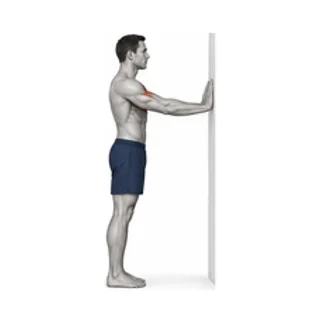
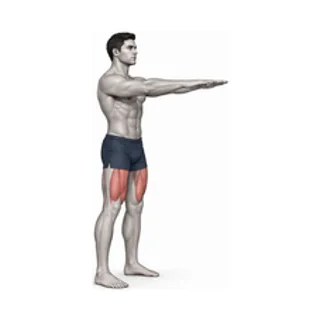
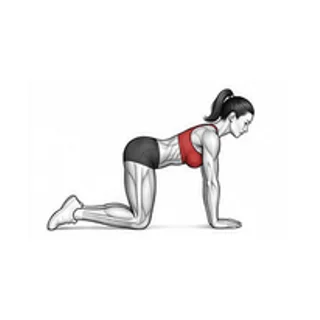
The full-body session combines marching, squat, wall push-up, bird dog and bridge. It therefore needs room for standing, a solid wall and floor work. Gentle core includes different floor positions, while Legs, at your own pace repeats squats and bridge within its sequence.
Read the individual movement guides when a position is unfamiliar. Check the easier option and whether the equipment setup is practical. A mat may be listed, and a wall exercise still requires a stable wall even though there are no hand weights.
Prepare transitions and timing realistically
The session’s minute label describes its programmed exercise and rest intervals, rounded upward. It does not include every setup task, a separate warm-up, extra pauses or a cool-down. Leave a practical time window around the routine.
Check the route between the screen, wall and floor area. A sequence may fit one exercise at a time while still requiring an awkward transition. Clear loose objects and give yourself enough room to get down, turn and stand without rushing.
Pause the timer if a transition needs longer than the programmed rest. Check the displayed intervals before you start.
Use the second week to review familiarity
Repeating a session gives you another opportunity to understand its movements and setup. You might recognize the order more easily or prepare the screen in a better place. Those are useful practical changes even when the exercise list stays the same.
The second week does not automatically add repetitions, weights or a harder variation. The website does not calculate personal progressive overload from a completion record. If you consider changing a movement, read its specific instructions and suitable options rather than assuming that the date makes a harder version appropriate.
A repeated routine can still be demanding. Review comfort and control each time it returns. A familiar exercise name is not proof that your circumstances or readiness are unchanged. Use appropriate individual guidance when you need a personal progression plan.
Keep plan use separate from challenge progress
A plan links to standalone published workouts. A challenge follows its own day sequence and current-session flow. Starting a plan session does not silently rewrite the challenge schedule or mean that the same activity was saved as a challenge completion.
Plan sessions and challenges have different page flows. Read the activity title and completion state rather than assuming one action records progress everywhere.
Progress and preferences also stay in the current browser on the current device. The site does not currently provide automatic account synchronization or a cloud training record. Keep any personal planning notes you need separately, in a place suitable for that information.
Adjust the schedule without turning it into a test
A useful plan helps you understand the next step. It should not become a reason to exercise through pain, skip preparation or treat recovery days as failures. Stop if you experience pain, dizziness or feel unwell, and seek appropriate help or individual advice when needed.
Before the next scheduled session, ask whether the movement list is familiar, the space is ready and the routine fits your circumstances that day. You can choose an easier option, take more time or review another appropriate published session.
For recovery-day context, read Rest Days and Active Recovery. This guide describes DailyHomeFit’s current published schedules and controls. It is not a personalized two-week prescription, a medical clearance or a promise of specific fitness results.
Put the calendar in context
The NHS adult activity guidance distinguishes aerobic activity from muscle strengthening. A short plan is not proof that all activity needs are covered. Leave preparation time; the NHS warm-up guide offers general examples.
Prepared by the DailyHomeFit editorial team. Sources and published schedules checked 2 November 2026. No personal assessment or professional review is claimed.



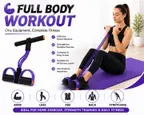 Pedal Resistance Trainer
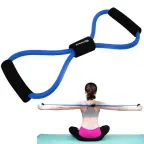 Figure-8 Resistance Band
 Foam-Grip Push-Up Bars
 Dual-Wheel Ab Roller with Knee Mat
 Adjustable Jump Rope
 Adjustable Hand Gripper
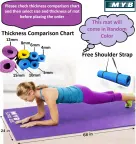 6 mm Exercise Mat
 Fabric Resistance Loop Set
 Yoga Stretching Strap
 EVA Foam Yoga Block