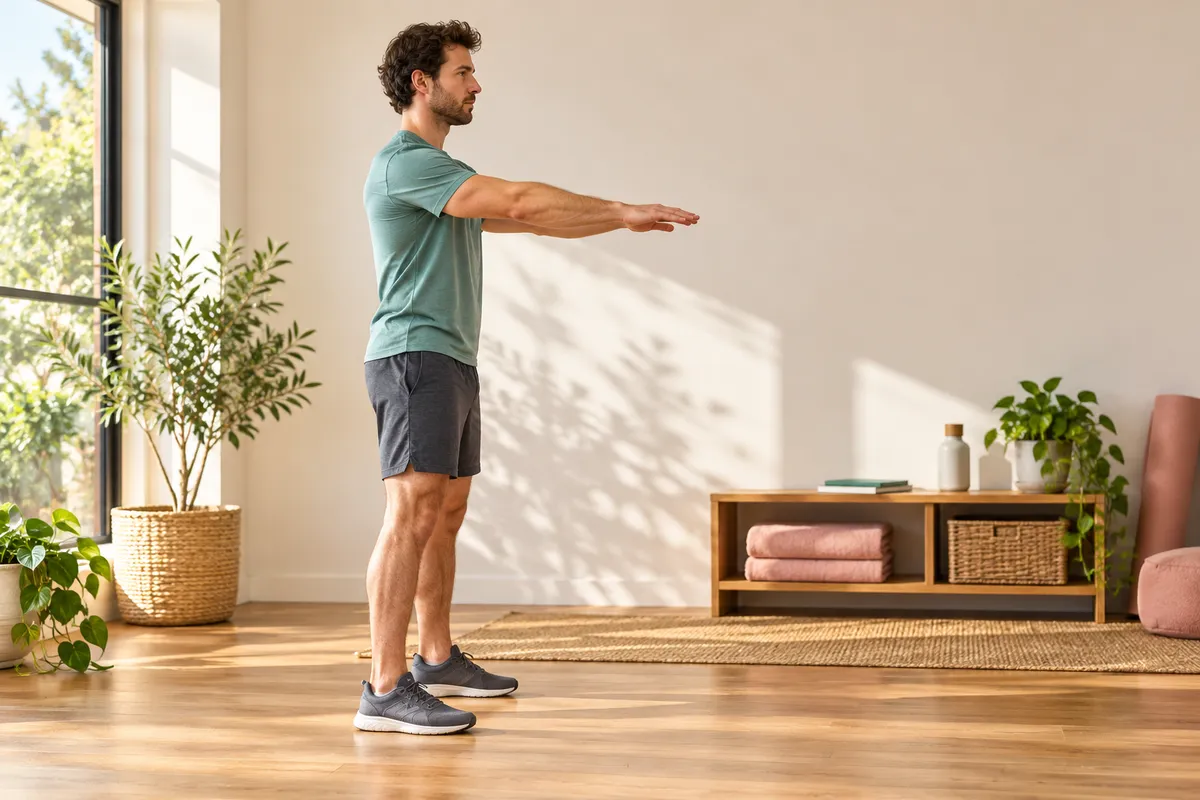
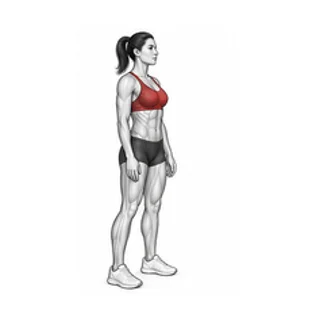
A bodyweight squat starts from standing: you bend at the hips and knees, then return to standing without holding a weight. Before adding repetitions, find reliable footing and a lowering range you can control. The useful starting question is not how low you can go, but whether you can lower and stand back up comfortably.
Use this guide with the squat instructions and the demonstration shown with this article. It explains setup and session choices; an animation cannot assess your own technique. A Beginner label is a library description, not a personal assessment.
Make room before you start
Clear space behind your hips and in front of your arms. Move cables and loose objects out of the way. If a mat is already down for another movement, check that its edge does not leave one foot on a different surface. Position the screen where you can review the demonstration before moving, without holding a phone near your feet.
Mayo Clinic suggests a brief aerobic warm-up before strength work in its strength-training overview. Read that guidance in context; a short website timer is not a complete warm-up assessment.
Learn a controlled attempt
The site’s squat page gives this basic sequence:
- Stand with feet about shoulder-width apart and find a stable starting position.
- Bend the knees while moving the hips back, keeping the chest comfortably lifted.
- Stop lowering at a comfortable range you can control.
- Press through the feet to return to standing, then settle before another attempt.
Keep breathing rather than holding your breath to finish. The ACE bodyweight squat guide also describes stable foot contact and raising the hips and torso together. It is an additional reference, not a review or endorsement of this website.
Use a smaller range first
DailyHomeFit lists a smaller range or light contact with stable support as easier options. Choose the option before an interval when possible. A chair that slides or tips is not reliable support merely because it is nearby; avoid reaching awkwardly to use furniture.
You do not need to copy the demonstration’s lowest position. If your footing changes, you rush the return or the movement becomes uncomfortable, pause and reassess the range. Do not force depth through pain. Seek individual guidance if you are unsure how to adapt the movement.
Read repeated cards as repeated work
Legs, at your own pace repeats a four-item sequence three times: march, squat, bridge, squat. Its 12 intervals therefore include six squat entries, not six different squat variations. It uses 30-second movement intervals and 15-second rests between them; the last interval does not require another between-interval rest.
The bridge also means getting down to a mat and back up. Review those transitions before choosing this routine. No-equipment starter instead repeats march, squat, wall push-up, march three times, with the same interval lengths. Compare the whole session, not just its squat count.
Leave room to pause and recover
An interval is a time window, not a repetition target. Use fewer controlled attempts, take longer rests or stop the session when needed. The timer cannot judge fatigue, balance or readiness for another set. Record the range and support you actually used rather than treating completion as proof of good form.
For a wider choice of movements, read Bodyweight Exercises for Beginners. Stop if you experience pain, dizziness or feel unwell. Existing injuries, medical conditions and pregnancy may need individual advice. Published by DailyHomeFit; sources and session details checked on 27 October 2026. General adult fitness information, without a personal assessment or claimed expert review.



 Pedal Resistance Trainer
 Figure-8 Resistance Band
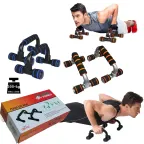 Foam-Grip Push-Up Bars
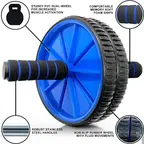 Dual-Wheel Ab Roller with Knee Mat
 Adjustable Jump Rope
 Adjustable Hand Gripper
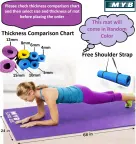 6 mm Exercise Mat
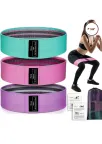 Fabric Resistance Loop Set
 Yoga Stretching Strap
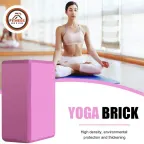 EVA Foam Yoga Block